TLDR: A calzone is a folded, sealed pocket typically stuffed with ricotta and eaten as its own meal; a stromboli is a rolled, sliced sandwich built for sharing. The calzone wins for cheese-forward, single-serving comfort; the stromboli wins when you want layered deli flavors and something to pass around the table.
By Anthony Marino · Head Pizzaiolo, Brothers Pizza · Last updated May 18, 2026
The Stakes
Get this choice wrong and you end up with the wrong texture, the wrong portion size, and a dinner table argument that somehow ends with someone blaming Italy. More practically: if you're feeding a family of four at one of our York, PA locations, ordering three stromboli to split makes a lot more sense than four calzones. But if you're the one person at the table who wants nothing but mozzarella and ricotta in a crispy dough shell, the stromboli won't scratch that itch.
After 22 years making both — and personally training more than 40 pizzaioli across our four locations in York, Gettysburg, Hanover, and McSherrystown — I can tell you this question comes up at the counter almost every shift. Let me settle it properly.
The Common Mistake
Most comparisons of calzone vs stromboli get stuck on geography. They say "calzones are Neapolitan, stromboli is Italian-American," drop a fun fact about the 1950 film Stromboli, and call it done. That framing misses what actually matters to someone standing at the counter hungry.
The right way to think about it: these two items behave differently at the table. One is a single-serving meal sealed around a creamy filling. The other is a shareable roll built from deli-style layers. The origin story doesn't affect how full you feel or whether your table of six can split it.
The 4 Conditions That Determine the Winner
The answer flips based on these variables:
Group size — A stromboli slices cleanly into rounds. A calzone doesn't share well; cutting it in half mid-meal is messy and kills the steam pocket inside that keeps everything moist.
Filling preference — If ricotta is non-negotiable for you, the calzone is built for it. Most stromboli recipes skip ricotta entirely because the extra moisture makes the roll hard to slice cleanly.
Texture priority — Calzones have a thick, pillowy interior wall of dough that puffs from the steam of the cheese inside. Stromboli dough is thinner and crispier throughout because it bakes tighter around the filling.
Dipping sauce role — A calzone is traditionally served with marinara on the side as a dip. Stromboli can go either way, but because sauce is often rolled inside it, you don't always need extra. If you love sauce-forward eating, the stromboli gives you that option without a cup on the side.
Calzone: What It Actually Is
A calzone starts as a round of pizza dough — we use the same 72-hour cold-fermented dough we put under our deck-oven pies — stretched to roughly 12 inches, filled on one half, then folded over and crimped shut. The seal is critical. A leaky calzone floods the deck with molten cheese and you lose 40% of the filling before it even reaches the table.
Strengths:
- Cheese capacity. Because the calzone is sealed, it holds a much higher cheese-to-everything-else ratio than a stromboli without getting soggy. We layer whole-milk mozzarella and a generous scoop of ricotta inside ours. The ricotta becomes almost custard-like after 12–14 minutes at 550°F.
- Self-contained meal. One calzone is genuinely filling. You're looking at a pound or more of dough and filling. The Delone Catholic and York Revolution crowds who come in after evening events routinely order one calzone each and that's dinner, full stop.
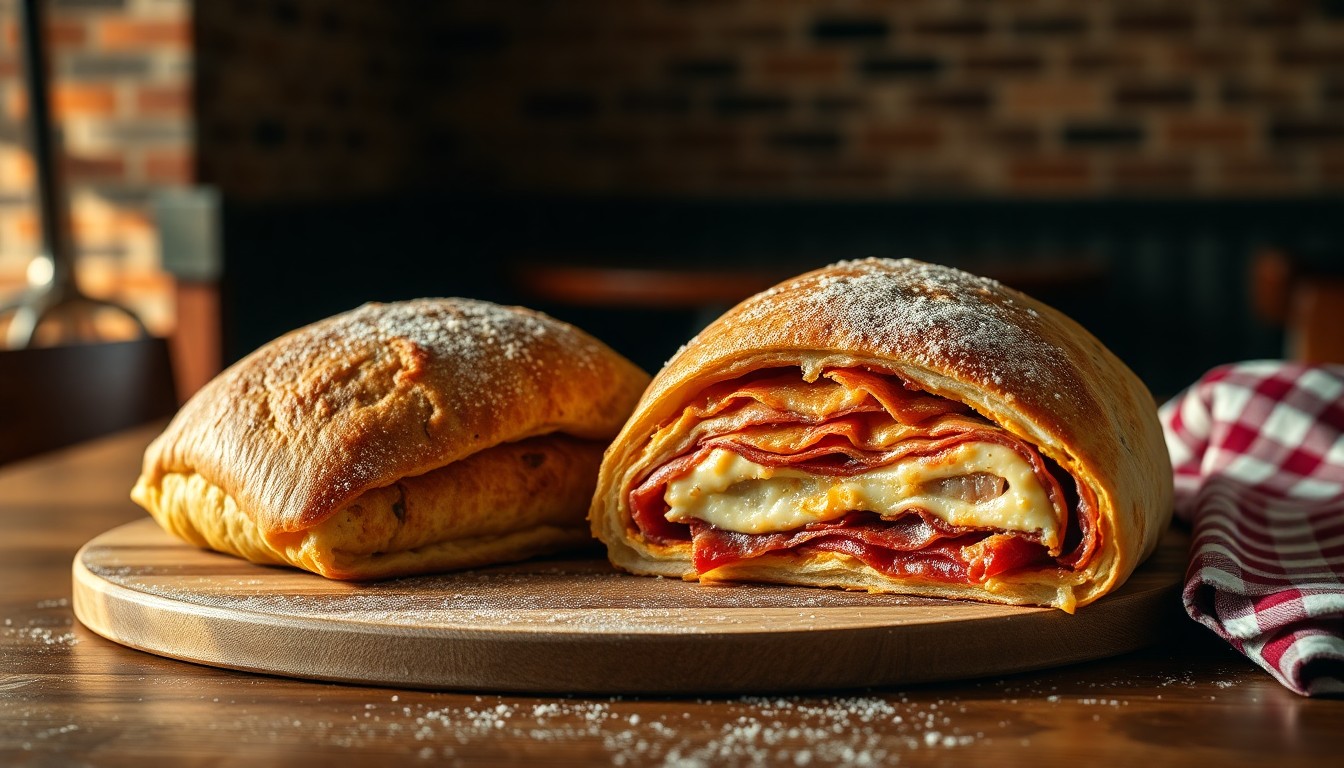
- Steam-pocket magic. When that dough seals and hits the oven deck, steam from the mozzarella and ricotta inflates the interior. You get a double-wall of cooked dough around a molten, almost soufflé-like cheese center. That texture doesn't exist in any other pizza kitchen item.
Weaknesses:
- Hard to share. Cut it wrong and the filling pours out onto the tray. Cut it right and you've got two lopsided pieces that cool fast.
- Ricotta moisture risk. If we don't drain the ricotta long enough, the bottom dough goes soft. I've seen this happen in high-volume situations — Friday nights when we go through 600 lbs of dough and the prep team is moving fast. The fix is always: drain the ricotta, don't rush the fold.
- No sauce inside (traditionally). Purists don't put tomato sauce inside a calzone. Some customers expect it and are surprised when it's not there. The marinara cup on the side is the answer, but it's a different experience than biting into sauce-rolled stromboli.
The exact profile this fits: One person, cheese-obsessed, wants a hot meal they don't have to think about sharing. Parents picking up after a long shift. A solo order at our McSherrystown location on a Tuesday night.
Stromboli: What It Actually Is
A stromboli is a rectangle of pizza dough laid flat, covered edge-to-edge with fillings — typically Italian deli meats, provolone, and sometimes a thin layer of sauce — then rolled lengthwise into a log, sealed at the ends, and baked. The result slices into rounds like a pinwheel sandwich. Some people call it a rolled pizza. That's not wrong, but it undersells the layering effect.
Strengths:
- Layered flavor in every bite. Because you're rolling meat and cheese in alternating sheets, each cross-section has the same ratio of every ingredient. There's no bite that's "mostly dough." A properly made stromboli with capicola, salami, and provolone has that layered deli flavor that a calzone can't match.
- Shareable by design. Slices into clean rounds. Pass it around. Half a stromboli is a solid lunch; a full one feeds two without anyone feeling shorted. For game-night orders at our York location, stromboli is the move.
- Textural contrast. The outside crust bakes harder and crispier than a calzone because there's no steam pocket inflating it from inside. You get a crunch on the exterior and a chewy, layered interior. That contrast is why stromboli reheat better than calzones — the crust crisps back up in the oven.
Weaknesses:
- Ricotta doesn't belong in it. If you want that creamy, custard-like cheese experience, the stromboli won't give it to you. The moisture content breaks the roll structure.
- Harder to execute at volume. Rolling a stromboli evenly under pressure takes more skill than folding a calzone. During Friday night rushes, inconsistent rolling leads to uneven baking — one end overcooked, one end soft. Our training protocol for new pizzaioli at all four locations spends more time on stromboli technique than almost anything else.
- End-piece problem. The two end rounds are mostly dough. Some people love them. Some people feel cheated. Order two stromboli for a table of four and the end-piece argument is going to happen.
The exact profile this fits: Families ordering for the table, group events, anyone who wants Italian deli flavors in a hand-held format. Coaches feeding youth sports teams after a Saturday game in Hanover or Gettysburg.
Head-to-Head: The Criteria That Actually Matter
| Criterion | Calzone | Stromboli | Winner |
|---|---|---|---|
| Cheese richness (ricotta + mozzarella) | High — ricotta standard | Low — ricotta rarely used | Calzone |
| Shareability (table of 4+) | Poor — doesn't slice cleanly | Excellent — clean rounds | Stromboli |
| Exterior crust crunch | Soft, steamed exterior | Crispy, baked exterior | Stromboli |
| Reheats well next day | Mediocre — steam pocket collapses | Very good — crust re-crisps | Stromboli |
| Deli meat layering | Limited — meats optional | Built for it | Stromboli |
| Single-serving satisfaction | Excellent — one = a full meal | Requires half or full roll | Calzone |
| Sauce inside option | No (traditional) | Yes, rolled in | Stromboli |
| Dipping sauce experience | Yes — marinara on side | Optional | Calzone |
The Verdict
A calzone is the right choice IF:
- You're eating solo and want one complete, filling meal.
- Ricotta is your non-negotiable — you want that creamy, molten cheese center.
- You're a dipper: you want hot marinara on the side and you'll use every drop.
- You prefer a softer, puffier dough experience over crunch.
A stromboli is the right choice IF:
- You're feeding more than two people from one item.
- You want Italian deli flavors — capicola, salami, ham, provolone — in a layered roll.
- You value reheating quality and expect leftovers.
- You want something that looks impressive on the table, sliced into rounds, without a lot of fuss.
When the Answer Flips
There are specific scenarios where the normally weaker option wins:
- If you're feeding kids under 10: The calzone wins even for groups. Kids don't share food well. One calzone each is easier to manage than arguing over stromboli rounds.
- If it's the next day and you have leftovers: The stromboli wins decisively. A cold calzone is fine; reheated calzone is hit-or-miss because the steam pocket is gone and the dough can go gummy. A stromboli round dropped in a 375°F oven for 8 minutes comes back almost as good as fresh.
- If someone at the table is vegetarian: The calzone wins because cheese-only calzones are genuinely satisfying on their own. A vegetable stromboli works, but roasted vegetables add moisture that can make the roll harder to slice cleanly.
- From professional experience: I've seen the stromboli win at birthday parties every time — even among people who say they prefer calzones. Something about the sliced-round presentation makes people eat more and enjoy it more. It's a communal format, and communal formats win at tables where people are having fun.
Quick Decision Helper
Three questions. Answer them in order:
Are you eating alone or with one other person? → If yes, go calzone.
Do you want ricotta in your filling? → If yes, go calzone.
Are there four or more people at your table? → If yes, go stromboli.
If you answered "no" to all three, you're in the middle zone — order whichever one you haven't tried recently. Both are worth your time.
What 22 Years in the Kitchen Actually Teaches You
Here's the thing nobody tells you: the quality difference between a calzone and a stromboli at most pizza shops comes down entirely to dough handling, not the fillings. Bad dough means a gummy calzone center or a stromboli that unravels in the oven. Good dough — properly fermented, properly tempered before stretching — means both work the way they're supposed to.
Our dough at Brothers Pizza cold-ferments for 72 hours. That timeline isn't tradition for tradition's sake. It develops the gluten structure that lets a calzone hold its crimp under 550°F without blowing out, and lets a stromboli roll stay tight without using excessive pinching at the ends. Rushed dough — 24 hours or less — will fail on both items. You can taste the difference. It's not subtle.
If you're curious about how our dough philosophy translates to the full pizza menu, our NY-style vs Neapolitan vs Detroit comparison gets into it in depth. And if you want to see everything we make, the full menu is the place to start.
One More Thing Worth Knowing
We make both at all four of our locations — York, Gettysburg, Hanover, and McSherrystown. The stromboli at our McSherrystown location is consistently one of our top-sellers on weekends. The calzone holds its own across every location on weeknights when the solo-diner crowd comes in after work.
Neither item is a lesser version of a pizza. They're both distinct things that deserve to be treated as such. Order the one that fits your table. And if you're still not sure, ask whoever's behind the counter — we've had this conversation before.